
These images were captured during my trip to Puerto Rico, where tropical landscapes, low latitude skies, and dark coastal locations create unique conditions for astrophotography. Palm trees, yachts, and ocean waves combine naturally with constellations and the Milky Way, producing nightscapes that look very different from those photographed at higher northern latitudes.
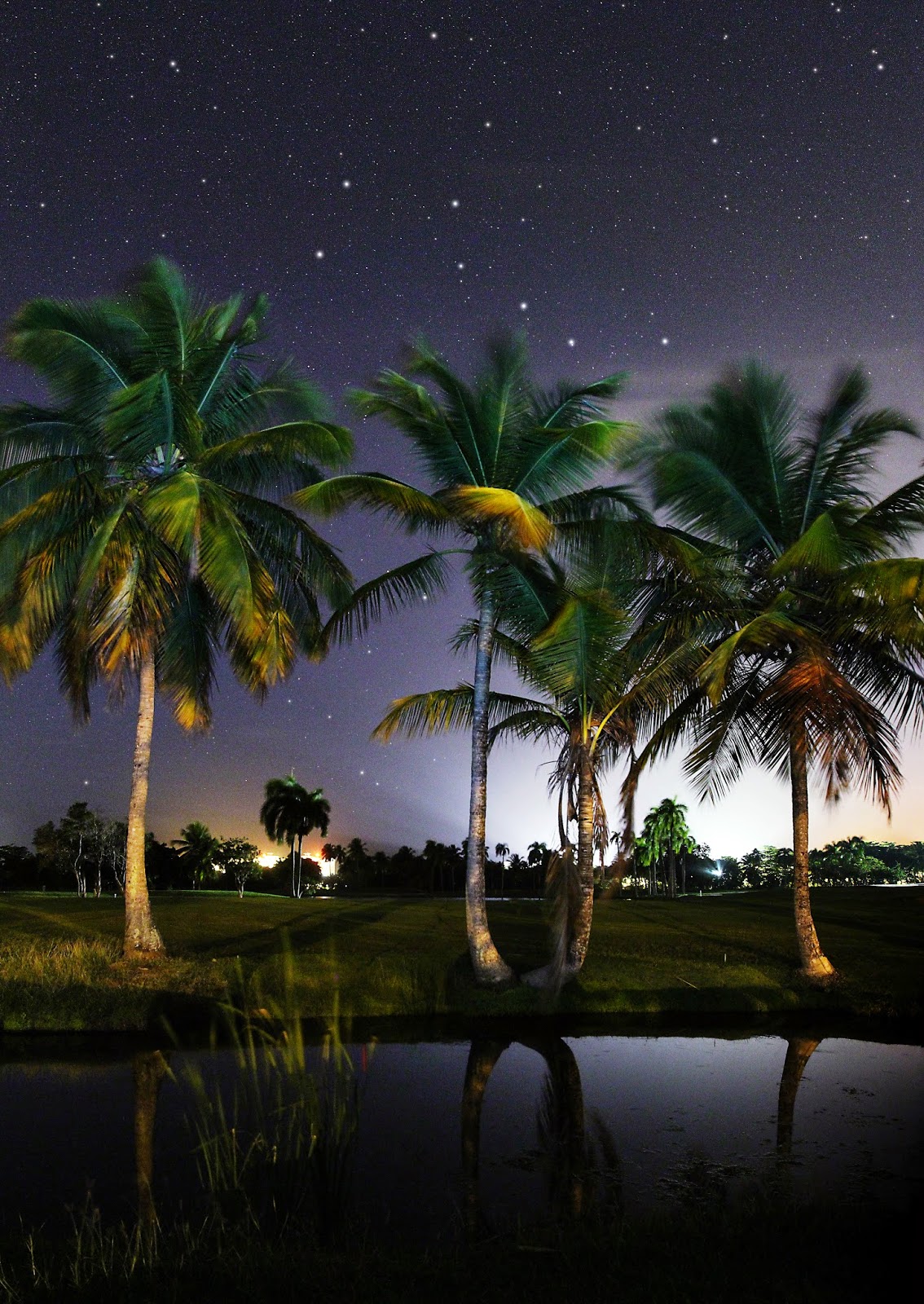 |
| Puerto Rico Astrophotography - Big Dipper constellation, Canon 60Da |
Location: Wyndham Grand Rio Mar Beach Resort, Puerto Rico
Canon EOS 60Da · EF 16–35mm f/2.8L II USM · Panorama of 4 frames · ISO 3200 · f/6.3
This image can be used as a practical astronomy question: “What is the latitude of the observer?” Palm trees and the low altitude of the Big Dipper provide strong clues that this photo was taken much closer to the equator than typical northern U.S. locations.
 |
| Palm trees and Jupiter in the Puerto Rico night sky |
Canon EOS 60Da · EF 16–35mm f/2.8L II USM · 20 sec · ISO 3200 · f/4.5
 |
| Palm trees with Orion and Canis Major — Puerto Rico astrophotography |
Canon EOS 60Da, EF16-35mm f/2.8L II USM lens, 20 sec, ISO-3200, F4.5
 |
| Yacht astrophotography at Culebra Island Puerto Rico with long exposure night sky |
Canon 60Da, EF16-35mm f/2.8L II USM lens, 30 sec, ISO-3200, F4
 |
| Near Equator Big and Little Dippers Puerto Rico Nightscape Astrophotography |
Canon 60Da, Wide Angle EF16-35mm f/2.8L II USM lens, 10 sec, ISO-6400, F2.8
 |
| Northern Pole Star - Polaris - Laser Pointer Puerto Rico Golf Course Astrophotography |
Canon 60Da, EF16-35mm f/2.8L II USM lens, 14 sec, ISO-3200, F6.3
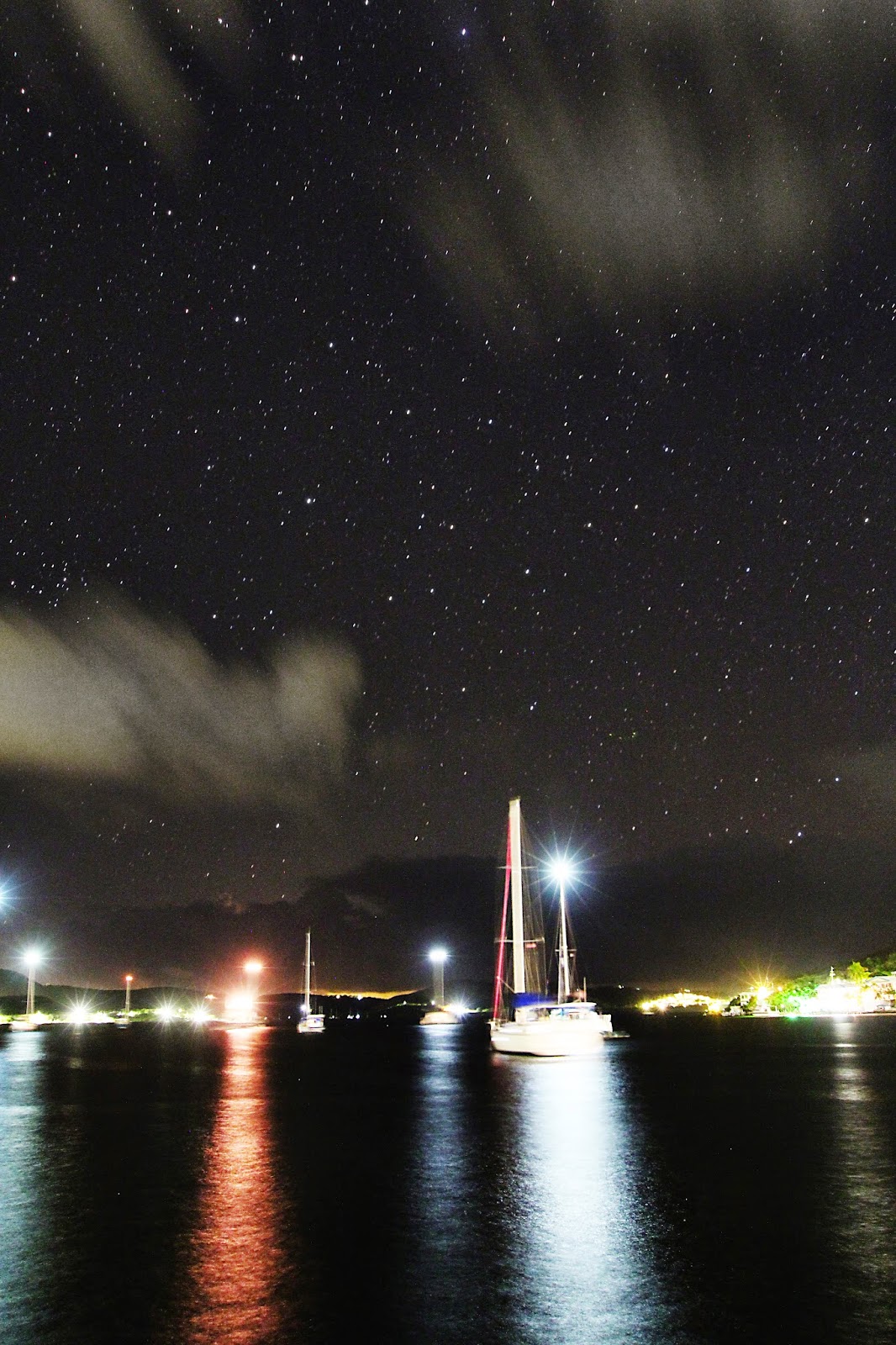 |
| Culebra Puerto Rico Night Sky |
Advanced Astrophotography — Tracked Exposure
The final image below represents a different level of astrophotography. Unlike the previous nightscapes, this photograph was captured using a star tracker, allowing a much longer exposure and revealing faint nebulae invisible in short exposures.
 |
| Orion, Canis Major and Milky Way - iOptron SkyTracker Astrophotography Puerto Rico |
Barnard’s Loop is often one of the first emission nebulae successfully captured in tracked wide-field astrophotography, making it a natural milestone for beginners moving beyond nightscapes.
Canon EOS 60Da · EF 16–35mm f/2.8L II USM · iOptron SkyTracker
120 sec · ISO 3200 · f/4.0 · Culebra Island, Puerto Rico
At this exposure length, faint objects become visible, including Barnard’s Loop, the Great Orion Nebula (M42), Horsehead Nebula (IC 434), Witch Head Nebula (IC 2118), Rosette Nebula, and Seagull Nebula (IC 2177).
Winter Milky Way images are more challenging than summer Milky Way photography because the galactic center lies on the opposite side of the sky. Tracking with the iOptron SkyTracker made it possible to capture significantly more detail despite limited clear skies.
Related Astrophotography Posts
-
Canada Astrophotography (Golf Course Nightscapes)
Canada Astrophotography — Ontario Golf Course Nightscapes -
Puerto Rico Astrophotography
Bioluminescent Astrophotography — Puerto Rico -
Radio Astronomy & Observatories
Puerto Rico Radio Telescope — Arecibo Observatory -
Deep-Sky Astrophotography
Pelican Nebula Astrophotography (IC 5070 & IC 5067) -
Tracked Astrophotography
M42 Orion Nebula using iOptron SkyTracker (NYC)

No comments:
Post a Comment