blank'/>

Astrophotography banner

Showing posts with label landscape. Show all posts

Monday, February 29, 2016

Aruba Astrophotography - Canon 60Da

Continuing my travel astrophotography journey, this time in Aruba — an island famous for its white beaches and iconic wind-shaped divi-divi trees.

Usually I plan my travel astrophotography around the new Moon phase. Dark skies provide maximum contrast and are ideal for Milky Way and deep-sky work. However, travel schedules do not always align perfectly with lunar cycles — and that was exactly the case in Aruba.

The Moon was already above the horizon during these sessions. At first, this was not part of the plan. But experience teaches flexibility. Instead of seeing it as a limitation, I began to explore the creative advantages of moonlight.

Accidentally, I discovered something valuable: moonlight adds structure and dimensionality to night landscapes. It illuminates sand textures, defines silhouettes of Aruba’s distinctive trees and cacti, and creates dramatic ocean reflections that would not exist during a new Moon.

These images were not originally intended as “moon photography.” They evolved naturally from the situation — a reminder that astrophotography is not only about perfect planning, but also about adapting to conditions and finding unexpected opportunities.

Divi-divi tree silhouette on Aruba beach with Moon above branches and moonpath reflection across the Caribbean Sea
Aruba Moon Nightscape – Divi-divi Tree, Moon and Ocean Moonpath

On the first image, a recognizable Aruba beach tree frames the Moon above the Caribbean Sea. The bright moonpath reflection stretches across the ocean surface, while faint stars and drifting clouds remain visible in the background sky. The tree silhouette immediately identifies the location — a natural signature of Aruba’s coastline.


Large cactus silhouette in Aruba foreground under starry night sky illuminated by moonlight
Aruba Astrophotography Cactus and Stars (Orion)

The second image highlights a large cactus standing prominently in the foreground. Behind it, the starry sky forms a deep cosmic backdrop. Under moonlight, the cactus becomes a natural sculpture — textured, defined, and grounded — while the sky remains expansive and luminous.

Bright Moon centered above Caribbean Sea with strong moonpath reflection and trees framing the edges
Aruba Astrophotography Night Landscape Moonlight and Moonpath

The third image shifts the focus almost entirely to the Moon and its bright reflection across the Caribbean Sea. The trees appear only along the left and right borders of the frame, acting as subtle natural framing elements. The central composition is dominated by the Moon and the glowing moonpath stretching toward the horizon.


All images were captured with the modified Canon 60Da, preserving both the moonlit landscape and the star field in a single exposure. Moonlight nightscape photography is not about maximum darkness — it is about using natural illumination creatively to shape the scene.

Related Astrophotography Posts

Saturday, October 3, 2015

Airglow Astrophotography - Bryce Canyon National Park - Sunset Point

Night sky with green airglow, the Milky Way, Seven Sisters (Pleiades) and Andromeda Galaxy is on the top; hoodoos, caused by erosion over many millennia, are on the bottom. This photo was done from my trip to Bryce Canyon in Sunset Point.

Beginner tip: if the night sky looks green in very dark conditions, it is usually natural airglow — not a mistake. Truly dark skies are rarely blue. Do not use Photoshop to make the sky “blue”; green, yellow, and red tones are natural colors of the dark night sky.

Airglow Milky Way Pleiades Andromeda over Hoodoos Bryce Canyon Sunset Point Utah Astrophotography
Airglow Astrophotography in Bryce Canyon National Park

Canon 60Da, EF16-35mm f/2.8L II USM, 30.0 sec; f/3.5; ISO 6400

On this picture you can see a lot of green color on the sky. If this is real color or just effect of camera filter? This question directly connected to other question “What is natural color of night sky?”

I started to learn astronomy many years ago reading the book with black and white pictures. So in these books I didn't see color picture of the natural sky. Most of time I was living in big city with a lot of light pollution, and I am not able to see natural color of sky.

Still remember when first time recognize that some starts has color and after that read article about color of stars cannot be green. After that article I assumed that green color is very rear on the sky. But this is not correct.

Most of Comet Tails has green color. Some Nebular are green too. Northern Light mostly has green colors. But Northern Light visible only near North Pole, comets are rear so still assume that this green colors are exceptions. When I started see Internet picture I saw a lot of strange colors so assuming that these is Photoshop. Especially after reading article how to remove light pollution in Photoshop. And only made some my own pictures I recognized that green color from Airglow effect is gives a lot of green on the natural sky. So a green color is pretty common on the natural sky too.

This photo got about 1.5K likes on National Parks Traveler Facebook

National Parks Traveler Facebook Astrophotography Feature Airglow Bryce Canyon
National Parks Traveler Facebook Astrophotography

Related Astrophotography Posts

Saturday, October 18, 2014

Grand Teton National Park Nightscape Astrophotography Colter Bay Village Starry Sky Canon 60Da

Grand Teton National Park is one of the few places in the United States where night truly returns to its natural state. Far from cities and artificial glow, the sky above Colter Bay reveals not only stars and the Milky Way, but also subtle atmospheric and optical effects that are invisible under light-polluted skies.

These nightscape images were captured near Colter Bay Village under moonless, pristine dark-sky conditions. Here, the Milky Way appears intensely detailed, reflections form easily on still water, and even ordinary clouds behave differently — no longer glowing from below, but appearing as dark silhouettes against the star field.

This post focuses on a different aspect of dark-sky astrophotography than my other Grand Teton images. Rather than reflections or monumental structure, it explores how darkness itself changes perception — revealing effects that can feel unusual, even surreal, simply because we are no longer accustomed to seeing the night sky as it truly is.

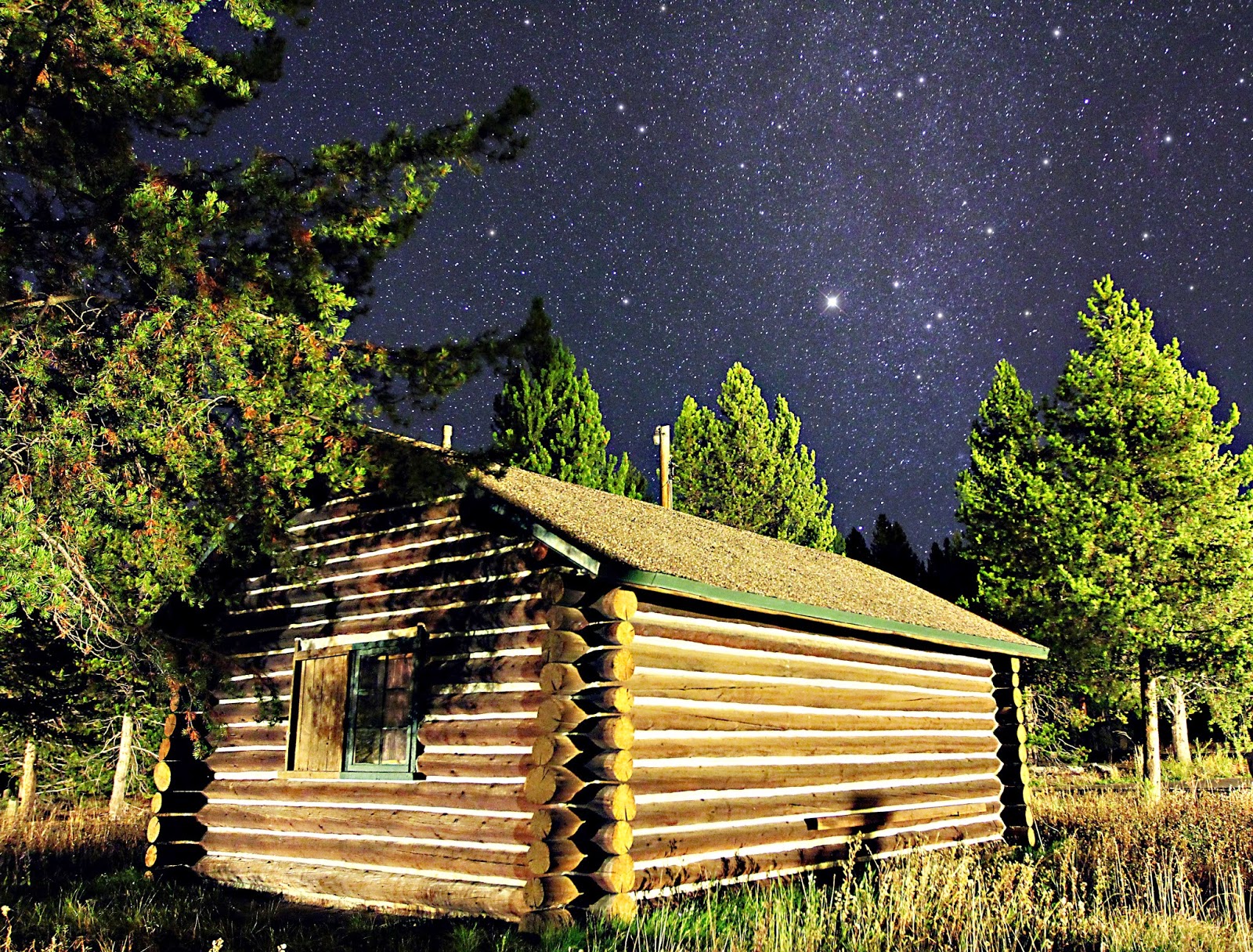
Starry night sky above a cabin at Colter Bay Village in Grand Teton National Park under dark skies
Grand Teton National Park Nightscape Astrophotography Colter Bay Village Starry Sky Canon 60Da

  Camera Canon 60Da; Wide Angle Lens EF16-35mm f/2.8L II USM; Exposure 20.0 sec; f/2.8; ISO 4000

Starry night sky above forest trees in Colter Bay Village, Grand Teton National Park
Night Sky Grand Teton - Canon 60Da
  
Camera Canon 60Da; Wide Angle Lens EF16-35mm f/2.8L II USM; Exposure 8.0 sec; f/2.8; ISO 4000

Starry night sky above trees with cabins between them at Colter Bay Village in Grand Teton National Park
Grand Teton Starry Night Sky
   Camera Canon 60Da; Wide Angle Lens EF16-35mm f/2.8L II USM; Exposure 20.0 sec; f/2.8; ISO 4000

Dark Earth cloud crossing the Milky Way over Grand Teton National Park night sky, captured with Canon EOS 60Da on tripod
UFO Cloud and Milky Way Grand Teton Astrophotography Night Sky Canon 60Da
  

On this quiet night in Grand Teton, I noticed an unusual dark cloud moving slowly across the Milky Way. It wasn’t a deep-space shadow, but a real Earth cloud, visible only because the sky was truly dark.

Under urban skies near New York, clouds glow from light pollution and never appear dark — but here, without moonlight and artificial glow, the same cloud became an inky silhouette against the stars.

Under truly dark skies, clouds can appear darker than the sky itself because they block starlight rather than reflect artificial light from below. When such a cloud passes over the Milky Way, it briefly hides millions of stars and forms a dramatic silhouette that can look almost supernatural.

I waited until it drifted over the brightest part of the Milky Way, creating the illusion of a UFO-shaped shadow floating across the galaxy.

Camera Canon 60Da; Wide Angle Lens EF16-35mm f/2.8L II USM; Exposure 30.0 sec; f/2.8; ISO 4000


Reflections of stars on calm lake water at Grand Teton National Park during a moonless night
Starry Sky Reflection Grand Teton Astrophotography

Milky Way rising between two trees above the Teton Range at Colter Bay in Grand Teton National Park
Night Sky Grand Teton Milky Way Astrophotography

Milky Way above the roof of a cabin at Colter Bay Village in Grand Teton National Park
Milky Way and Colter Bay Cabin Astrophotography

Grand Teton Night Sky Video

There is YouTube video


Grand Teton Astrophotography Series

Wednesday, October 15, 2014

Yellowstone Night Landscape – Geyser Eruption (Canon 60Da Astrophotography)

During this night in Yellowstone I had only a short window of clear sky, so I photographed Old Faithful during one of its nighttime eruptions. In some images (Image 1, Image 2, and Image 7) the geyser is captured at the peak of its activity, when the steam column rises very high and fills much of the frame even with a wide-angle lens. In the other photos the geyser shows its normal continuous steam, which is still bright and impressive at night but not as large as during the peak. After the strongest burst, the dew and moisture were so intense that I had to warm the lens before continuing photography.

All images were taken with the Canon 60Da and the Canon EF 16–35mm f/2.8L II USM wide-angle lens — an excellent combination for night landscapes and astrophotography thanks to its bright aperture and clean optical design.

Image 1 – Peak Eruption (Horizontal)

Peak nighttime eruption of Old Faithful in Yellowstone with a massive steam column filling the horizontal wide-angle frame.
Yellowstone Night Landscape Geyser eruption Canon 60Da

Camera Canon 60Da; Wide Angle Lens EF16-35mm f/2.8L II USM; Exposure 30.0 sec; f/2.8; ISO 4000

This horizontal image captures Old Faithful at the peak of its eruption. The steam column fills most of the frame, showing how large it appears when photographed up close with a wide-angle lens.

Image 2 – Peak Eruption with Milky Way (Vertical)

Vertical nighttime photo of Old Faithful peak eruption in Yellowstone with rising steam and part of the Milky Way visible.
Yellowstone Geyser eruption and the Milky Way
 
Camera Canon 60Da; Wide Angle Lens EF16-35mm f/2.8L II USM; Exposure 30.0 sec; f/2.8; ISO 4000

A vertical composition taken from the same location as Image 1. The strong eruption rises upward, and a portion of the Milky Way appears beside the plume. Through the steam you can see the silhouette of a nearby hotel building.

Image 3 – Three Geysers + Pleiades

Night landscape in Yellowstone showing three geysers erupting with the Pleiades star cluster above.
Yellowstone night sky Geyser astrophotography Canon 60Da
  
Camera Canon 60Da; Wide Angle Lens EF16-35mm f/2.8L II USM; Exposure 15.0 sec; f/2.8; ISO 3200

From a different angle, this photo shows three geysers: the main plume, a smaller geyser, and a tiny third one. Above them shines the Pleiades star cluster (Seven Sisters).

Image 4 – Black & White Astrophotography + Airglow

Black and white long-exposure photo of Old Faithful geyser steam at night showing natural airglow as bright clouds.
Yellowstone night  photography - black and white - Old Faithful Geyser
   
Camera Canon 60Da; Wide Angle Lens EF16-35mm f/2.8L II USM; Exposure 30.0 sec; f/2.8; ISO 4000

This long-exposure black-and-white image shows how differently a camera sees the night compared to human eyes. A camera can expose for 30 seconds or more, while our eyes collect light for only a fraction of a second. The bright green airglow seen in photos appears as white or grayish clouds to the naked eye.

Image 5 – Steam, Trees and Milky Way

Night view of Yellowstone geyser steam with foreground trees and the Milky Way rising above the scene.
Milky Way Galaxy Over Yellowstone National Park Starry night Sky Astrophotography Canon 60Da
   
Camera Canon 60Da; Wide Angle Lens EF16-35mm f/2.8L II USM; Exposure 30.0 sec; f/2.8; ISO 4000

A different angle introduces trees in the foreground while the Milky Way rises behind the drifting steam.

Image 6 – Milky Way, Airglow and Water Reflections

Night landscape in Yellowstone featuring geyser steam, Milky Way core, green airglow and water reflections on the ground.
Yellowstone Park Milky Way Galaxy Geyser Airglow Night Sky Landscape Astrophotography
 
Camera Canon 60Da; Wide Angle Lens EF16-35mm f/2.8L II USM; Exposure 30.0 sec; f/2.8; ISO 3200

A beautiful combination of the Milky Way, glowing green airglow, geyser steam and water reflecting light on the ground.

Image 7 – Peak Eruption + Pleiades

Photo of Old Faithful peak eruption with the Pleiades star cluster visible high in the sky.
Yellowstone eruptions and Pleiades seven sisters M45 Astrophotography
 Camera Canon 60Da; Wide Angle Lens EF16-35mm f/2.8L II USM; Exposure 15.0 sec; f/2.8; ISO 3200

A strong eruption reaching upward with the Pleiades star cluster clearly visible at the top of the frame.

Image 8 – Forest Background + Pleiades

Yellowstone nighttime scene showing geyser steam with a forest background and the Pleiades star cluster above.
Pleiades and geyser Yellowstone night starry sky landscape Canon 60da

In this composition the forest becomes visible behind the geyser field, and the Pleiades star cluster appears clearly in the night sky.

Image 9 – Distant View with Foreground Trees

Far-view nighttime photo of Yellowstone geyser steam with trees in the foreground.
Yellowstone starry night astrophotography Canon 60Da

This final image is taken from a distant position. Trees in the foreground add scale to the geyser steam rising into the night sky.

Camera Equipment

  • Camera: Canon 60Da astrophotography DSLR
  • Lens: Canon EF 16–35mm f/2.8L II USM
  • Aperture: f/2.8
  • Exposure: 15-30 sec
  • ISO: 3200-4000
  • Mode: Manual, tripod mounted

Related Yellowstone Astrophotography Posts