blank'/>

Astrophotography banner

Showing posts with label Cherry Springs State Park. Show all posts

Saturday, October 10, 2020

Austin Dam Ruins - Cherry Springs State Park Pennsylvania Astrophotography

The Austin Dam Ruins, located near Austin, Pennsylvania, are one of the most dramatic historic landmarks in the region surrounding Cherry Springs State Park — one of the darkest sky locations in the eastern United States. The massive concrete remains of the dam create an unusual foreground for nightscape astrophotography, combining history, landscape, and a pristine starry sky.

The original dam was constructed in 1909 to supply water for the Bayless Pulp and Paper Mill. On September 30, 1911, the dam catastrophically failed after heavy rains, sending a destructive flood through the valley below and causing significant loss of life. A second dam was later rebuilt on the same site, but it also failed during a severe flood in 1942. After the second disaster the structure was never rebuilt.

Today the broken concrete walls remain as a memorial and historic site. Since 1994 the Austin Dam Memorial Park Association has worked to preserve the ruins and maintain the surrounding parkland. For photographers visiting the Cherry Springs region, the dam provides a striking foreground subject beneath the dark skies of northern Pennsylvania.

Austin Dam Ruins astrophotography under dark skies near Cherry Springs State Park Pennsylvania
Austin Dam Ruins - Cherry Springs State Park Pennsylvania Astrophotography

Camera settings: Canon EOS Ra, ISO 16,000, 15 sec exposure, Canon EF 16-35mm f/2.8L II USM lens at f/2.8.

One interesting atmospheric phenomenon visible in this image is green airglow. Airglow is a natural emission of light from Earth's upper atmosphere caused by chemical reactions involving oxygen and other molecules at altitudes of about 90–100 km. Under very dark skies — such as those around Cherry Springs — airglow often appears as faint green bands or waves across the sky.

Green airglow and red Milky Way astrophotography Cherry Springs Pennsylvania
Green Sky and Red Milky Way - Cherry Spring State Park Pennsylvania Astrophotography

Camera settings: Canon EOS Ra, ISO 10,000, 25 sec exposure, Canon EF 16-35mm f/2.8L II USM, f/2.8.

Cherry Springs State Park is known for its exceptionally dark skies, often approaching Bortle Class 2-3 conditions. These skies allow faint phenomena such as airglow, zodiacal light, and the detailed structure of the Milky Way to become visible both visually and in long-exposure astrophotography.

Austin Dam ruins map Cherry Springs Pennsylvania astrophotography location
Austin Dam Ruins map


Although truly dark skies are rare in the eastern United States, locations such as the Cherry Springs region of Pennsylvania still offer remarkable conditions for astrophotography. Farther west, dark skies become even more common. Large areas of the western United States — particularly in states like Utah, Arizona, Nevada, and California — provide vast regions with minimal light pollution, allowing the Milky Way, airglow, and other faint sky phenomena to appear with striking clarity. For night sky photographers, exploring these different dark-sky environments is part of the adventure.

Related Astrophotography Posts – Pennsylvania Dark Skies

Monday, October 5, 2020

Watching the sky, Observing meteors, Making wishes - Cherry Springs State Park Pennsylvania

Cherry Springs State Park is one of the darkest places on the entire U.S. East Coast, making it perfect for meteor watching and night-sky photography. During this calm and crystal-clear night, we observed several meteors streaking across the sky. Even the faint ones were easy to see thanks to the park’s exceptional Bortle 2 skies.

Here is a close-up view of one of the meteors captured that night:

Meteor over Cherry Springs State Park Pennsylvania
Meteor over Cherry Spring State Park Pennsylvania

This meteor appears to be a random sporadic meteor, not part of a major shower — a reminder that even on quiet nights the sky always has surprises.

Here is the full wide-angle image from the same moment:

Watching the sky and observing meteors at Cherry Springs State Park
Watching the sky, Observing meteors, Making wishes - Cherry Spring State Park Pennsylvania

Camera setup:
Canon EOS Ra – ISO 10,000 – 15 sec exposure
Lens: Canon EF 16–35mm f/2.8L II USM – f/2.8

Nights like this, sitting under one of the darkest skies in America, always feel magical. A few meteors… a few wishes… and a perfect quiet night at Cherry Springs.

Related Astrophotography Posts

Wednesday, September 30, 2020

Cherry Springs State Park Pennsylvania Astrophotography

Located in north-central Pennsylvania at an elevation of about 2,300 ft (701 m), Cherry Springs State Park is one of the darkest places on the entire U.S. East Coast. The park is an officially recognized International Dark Sky Park and is famous among astronomers and astrophotographers for its pristine, high-altitude skies and excellent 360-degree horizon views.

The Milky Way Over the Observatory Domes

In the foreground you can see two astronomical domes, the distant forest line, and a fun set of signs reading “Galaxy” – “Slow Down” – “No Dust”. Above the scene, the Milky Way rises brightly across the sky.

Milky Way over two observatory domes at Cherry Springs State Park Pennsylvania with Galaxy Slow Down No Dust sign
Cherry Springs State Park Pennsylvania Astrophotography - Galaxy - Slow down - No dust

Camera & Lens

  • Canon EOS 60Da (modified for astrophotography)
  • Canon EF 16–35mm f/2.8L II USM

Exposure Details

  • ISO 20,000
  • 15 sec exposure
  • f/2.8

Processing

Processed using Adobe Camera Raw, Photoshop, Topaz Denoise AI and Topaz Sharpen AI to reduce noise, enhance star clarity, and balance the color of the Milky Way.

About Cherry Springs: Why It’s Special

Cherry Springs State Park is considered one of the top stargazing sites in the eastern United States. Its remote location and high elevation mean exceptionally dark skies, often reaching Bortle Class 2. On moonless nights, the Milky Way is easily visible to the naked eye from horizon to horizon.

  • Very low light pollution
  • Dedicated astronomer field
  • Restricted vehicle movement after dark
  • No white lights allowed
  • Excellent southern horizon for Milky Way imaging

From NYC, the drive takes approximately five hours, leading deep into Pennsylvania forest land. When you arrive at night, the darkness feels almost unreal — perfect for astrophotography.

Daytime Photos from the Park

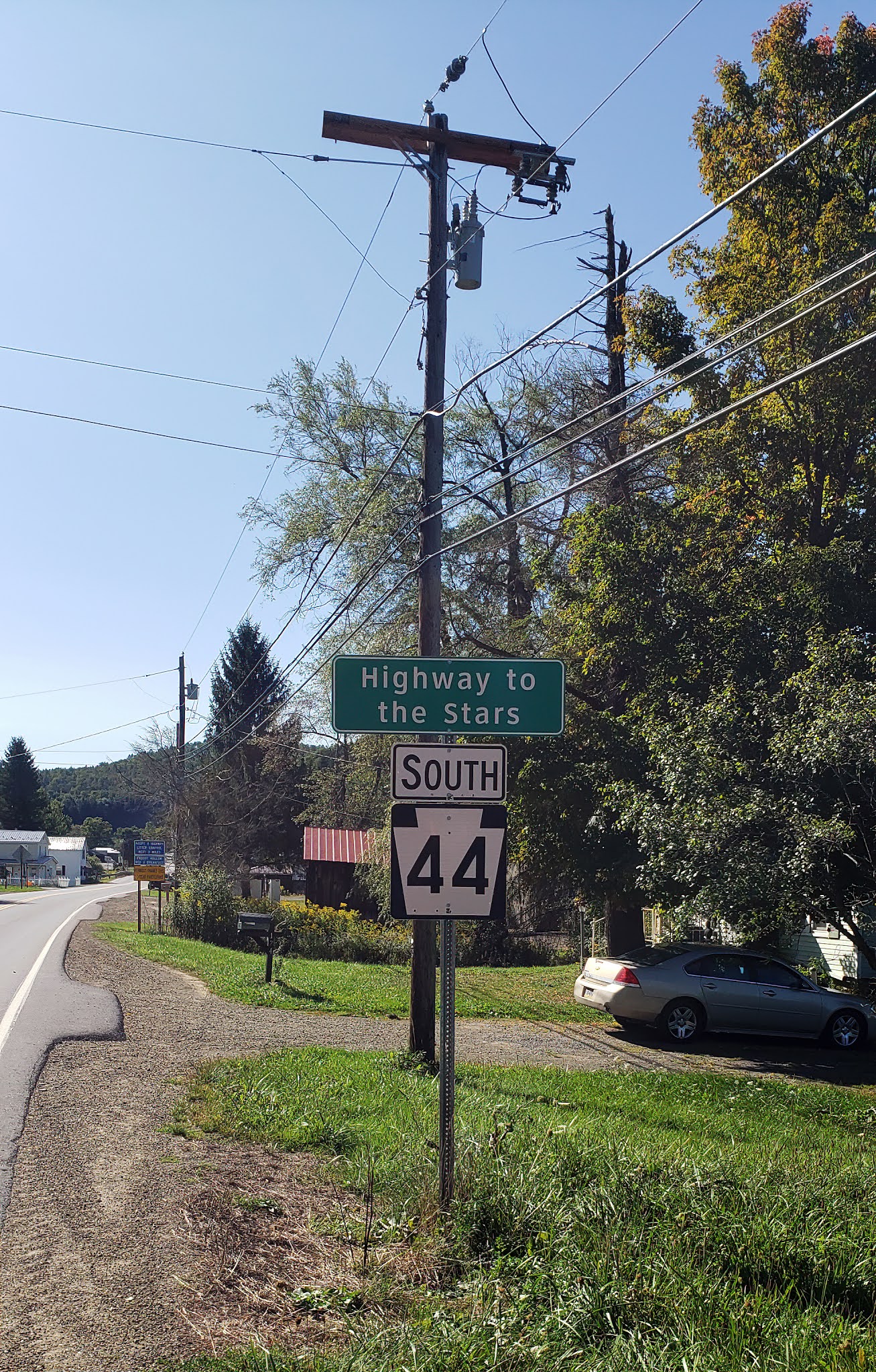
The following images were taken during the day to show how the park looks in normal light. This area includes the observatory domes, astronomer pads, fields, and surrounding forests. Cherry Springs has many fun details visible only in daylight — including the “Highway to the Stars” road sign near South 44, reminding visitors that they are entering one of the darkest and most famous stargazing locations in the eastern United States.


Astronomer area and domes at Cherry Springs State Park
Domes - Cherry Springs State Park, Pennsylvania

Astronomy field at Cherry Springs State Park Pennsylvania
Sign - Cherry Springs State Park

Dark Sky Fund Board information sign with logo at Cherry Springs State Park Pennsylvania
Dark Sky Fund

Stargazer's Delight informational sign at Cherry Springs State Park with astronomical images and text
Stargazer's Delight

Through an Astronomer's Eyes informational sign at Cherry Springs State Park showing astronomy diagrams and explanations
Through an Astronomer's Eyes

Road at Cherry Springs State Park with South 44 road sign and Highway to the Stars sign on pole
Highway to the Stars

Astro Haven Dome with nearby tents, parking area, and forest at Cherry Springs State Park Pennsylvania
Astro Haven Dome

Directional sign at Cherry Springs State Park showing Astronomers Overnight Area, Public Program Parking, Short Term Stargazing Parking, and Campground
Astronomers overnight area

Cherry Springs remains one of my favorite dark-sky locations in the eastern United States. The combination of quiet forest surroundings, dedicated observatory domes, and extremely dark skies makes it a dream destination for night-sky photographers.

Visiting Tips

  • Best time for Milky Way: April–September (new moon weekends are best).
  • Bring red lights only: white light is prohibited.
  • Warm clothing: nights get cold even in summer.
  • Arrive before sunset: headlights are not allowed to enter the astronomy field after dark.
  • Reserve ahead: astronomer field can fill up on holidays or special events.

Related Posts