blank'/>

Astrophotography banner

Wednesday, September 30, 2020

Cherry Springs State Park Pennsylvania Astrophotography

Located in north-central Pennsylvania at an elevation of about 2,300 ft (701 m), Cherry Springs State Park is one of the darkest places on the entire U.S. East Coast. The park is an officially recognized International Dark Sky Park and is famous among astronomers and astrophotographers for its pristine, high-altitude skies and excellent 360-degree horizon views.

The Milky Way Over the Observatory Domes

In the foreground you can see two astronomical domes, the distant forest line, and a fun set of signs reading “Galaxy” – “Slow Down” – “No Dust”. Above the scene, the Milky Way rises brightly across the sky.

Milky Way over two observatory domes at Cherry Springs State Park Pennsylvania with Galaxy Slow Down No Dust sign
Cherry Springs State Park Pennsylvania Astrophotography - Galaxy - Slow down - No dust

Camera & Lens

  • Canon EOS 60Da (modified for astrophotography)
  • Canon EF 16–35mm f/2.8L II USM

Exposure Details

  • ISO 20,000
  • 15 sec exposure
  • f/2.8

Processing

Processed using Adobe Camera Raw, Photoshop, Topaz Denoise AI and Topaz Sharpen AI to reduce noise, enhance star clarity, and balance the color of the Milky Way.

About Cherry Springs: Why It’s Special

Cherry Springs State Park is considered one of the top stargazing sites in the eastern United States. Its remote location and high elevation mean exceptionally dark skies, often reaching Bortle Class 2. On moonless nights, the Milky Way is easily visible to the naked eye from horizon to horizon.

  • Very low light pollution
  • Dedicated astronomer field
  • Restricted vehicle movement after dark
  • No white lights allowed
  • Excellent southern horizon for Milky Way imaging

From NYC, the drive takes approximately five hours, leading deep into Pennsylvania forest land. When you arrive at night, the darkness feels almost unreal — perfect for astrophotography.

Daytime Photos from the Park

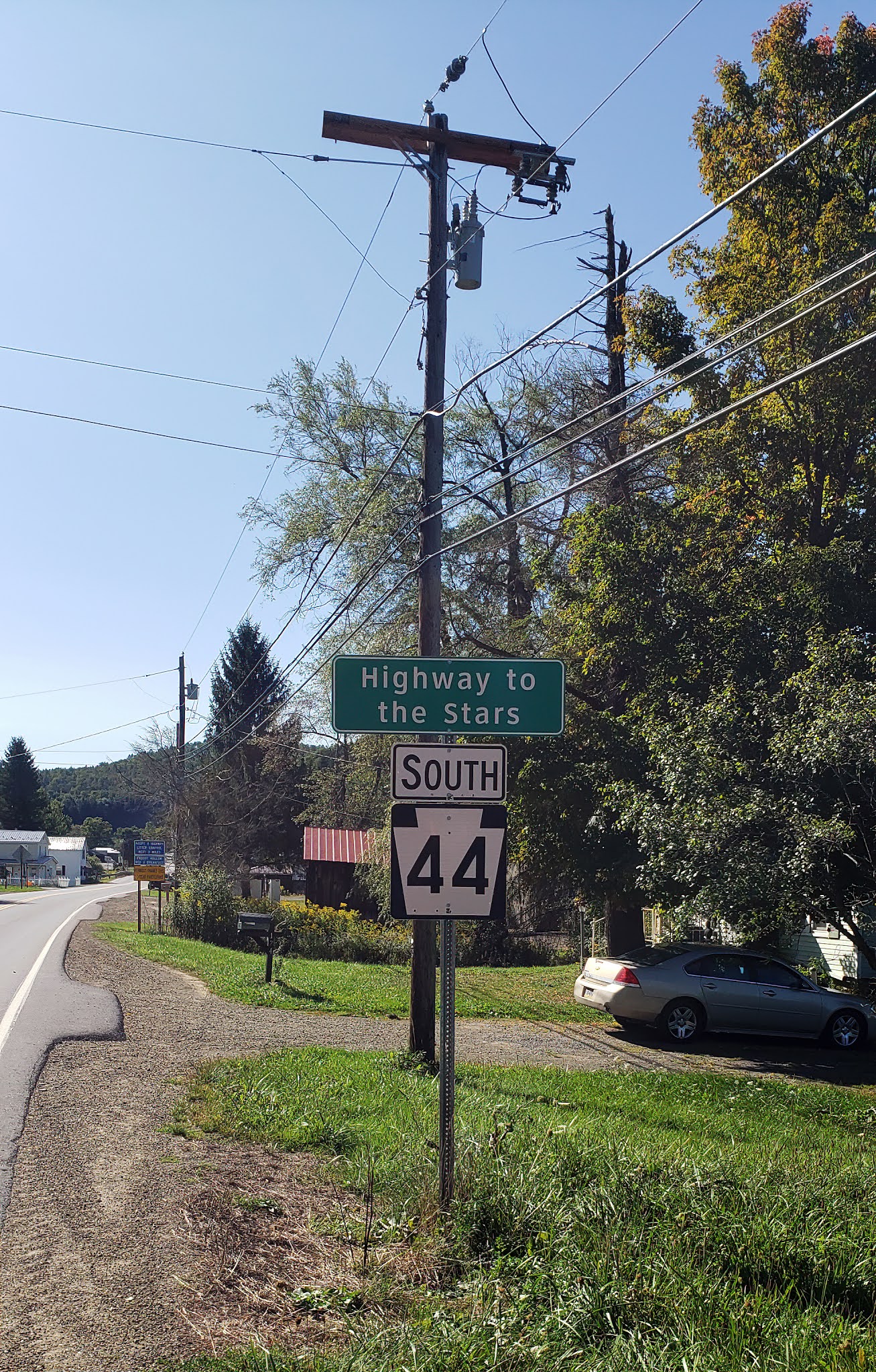
The following images were taken during the day to show how the park looks in normal light. This area includes the observatory domes, astronomer pads, fields, and surrounding forests. Cherry Springs has many fun details visible only in daylight — including the “Highway to the Stars” road sign near South 44, reminding visitors that they are entering one of the darkest and most famous stargazing locations in the eastern United States.


Astronomer area and domes at Cherry Springs State Park
Domes - Cherry Springs State Park, Pennsylvania

Astronomy field at Cherry Springs State Park Pennsylvania
Sign - Cherry Springs State Park

Dark Sky Fund Board information sign with logo at Cherry Springs State Park Pennsylvania
Dark Sky Fund

Stargazer's Delight informational sign at Cherry Springs State Park with astronomical images and text
Stargazer's Delight

Through an Astronomer's Eyes informational sign at Cherry Springs State Park showing astronomy diagrams and explanations
Through an Astronomer's Eyes

Road at Cherry Springs State Park with South 44 road sign and Highway to the Stars sign on pole
Highway to the Stars

Astro Haven Dome with nearby tents, parking area, and forest at Cherry Springs State Park Pennsylvania
Astro Haven Dome

Directional sign at Cherry Springs State Park showing Astronomers Overnight Area, Public Program Parking, Short Term Stargazing Parking, and Campground
Astronomers overnight area

Cherry Springs remains one of my favorite dark-sky locations in the eastern United States. The combination of quiet forest surroundings, dedicated observatory domes, and extremely dark skies makes it a dream destination for night-sky photographers.

Visiting Tips

  • Best time for Milky Way: April–September (new moon weekends are best).
  • Bring red lights only: white light is prohibited.
  • Warm clothing: nights get cold even in summer.
  • Arrive before sunset: headlights are not allowed to enter the astronomy field after dark.
  • Reserve ahead: astronomer field can fill up on holidays or special events.

Related Posts

Tuesday, September 22, 2020

Milky Way Rainbow Panorama Canon EOS Ra over Bethel Catskill NY

This image captures a full arch of our galaxy — often called the Milky Way Rainbow. It is my first full-sky panorama of the Milky Way made with the Canon EOS Ra, and another step in testing the camera’s impressive astrophotography performance.

The Canon Ra handles high ISO extremely well, producing low-noise results even at ISO 20,000. Using short 5-second exposures helped avoid star trailing and made the 20-shot panorama quick to capture. A dedicated contrast-enhancing filter helped bring out the structure of the Milky Way, and the final image was created by stitching all frames together in Photoshop.

The foreground shows tall grass with a line of forest farther in the distance. A bit of light behind the camera softly illuminates the landscape, creating depth and atmosphere while preserving the natural nighttime look. Above the scene, the Milky Way forms a complete glowing arch across the sky — a true “rainbow” of our galaxy rising over Bethel and the Catskill region of New York.


Milky Way Rainbow Panorama Canon EOS Ra over  Bethel Catskill  NY Astrophotography
Milky Way Rainbow Panorama Canon EOS Ra over  Bethel Catskill  NY - Astrophotography

Technical details:
Canon EOS Ra • EF 16–35mm f/2.8L II USM • f/2.8 • 5 seconds • ISO 20,000
Panorama of 20 photos

About the Catskill Region

The Catskill Mountains, located in southeastern New York State, are known for their rugged forests, hiking trails, wildlife, and the protected Catskill Forest Preserve. The area offers some of the darker skies in the region, making it an excellent place for landscape astrophotography.

Related Astrophotography Posts

Monday, September 14, 2020

Topaz DeNoise AI Canon Ra Milky Way Astrophotography

Noise is one of the main challenges in astrophotography. Even though the Canon EOS Ra produces noticeably less noise compared to the older Canon 60Da, high-ISO wide-angle images still show visible grain—especially when zoomed in.

Over the years I tried many noise-reduction tools including Adobe Camera Raw, Noise Ninja, and Photoshop’s built-in filters. But Topaz DeNoise AI completely changed my workflow. Its artificial intelligence–based processing gives far cleaner results with less effort, turning amateur astrophotography into almost professional-level output with just one filter.

Topaz DeNoise AI integrates directly into Photoshop, making the cleanup process simple, fast, and extremely effective.

Topaz DeNoise AI before-after comparison Milky Way astrophotography
Topaz DeNoise AI Astrophotography

This screenshot shows a live split-screen inside Topaz DeNoise AI. The left half displays the original noisy image, and the right half shows the AI-cleaned version. This preview uses my real astrophotography frame of the Milky Way’s bright galactic center rising over the forest in Bethel, Catskill, NY. The software allows adjusting settings in real time, so you can immediately see improvements in star sharpness, dust lanes, and sky texture as noise is reduced.

Canon EOS Ra — 5 sec, ISO 20,000, f/2.8, 16mm + Topaz DeNoise AI

Milky Way after Topaz DeNoise AI Canon EOS Ra noise reduction
Topaz DeNoise AI Canon Ra Milky Way Astrophotography


This is the final processed photo after applying Topaz DeNoise AI. Captured using the Canon EOS Ra in Bethel, Catskill, NY, this Milky Way frame becomes dramatically cleaner after denoising. The AI preserves fine structure in the galactic core, enhances contrast, and minimizes high-ISO grain while keeping the image natural and sharp.

Related Astrophotography Posts